Big changes are here! Starting 1 January 2025, the Australian Government has rolled out new rules to make climate-related financial disclosures clearer and more useful. The goal? To give everyone a better idea of how businesses handle risks and opportunities related to climate change.
Here’s the lowdown:
Why the Change?
The government wants to help regulators keep a close eye on how climate change affects our financial system. These changes also bring us in line with countries like the EU, UK, and New Zealand. It’s all about being transparent and staying competitive globally.
Who’s Affected?
If you’re running a small or medium business (SMB), good news: these rules probably don’t apply to you. The focus is on big players like large corporations, financial institutions, and investment funds with assets over $5 billion. If your business isn’t hitting those thresholds, you’re off the hook.
Here’s how it’s rolling out:
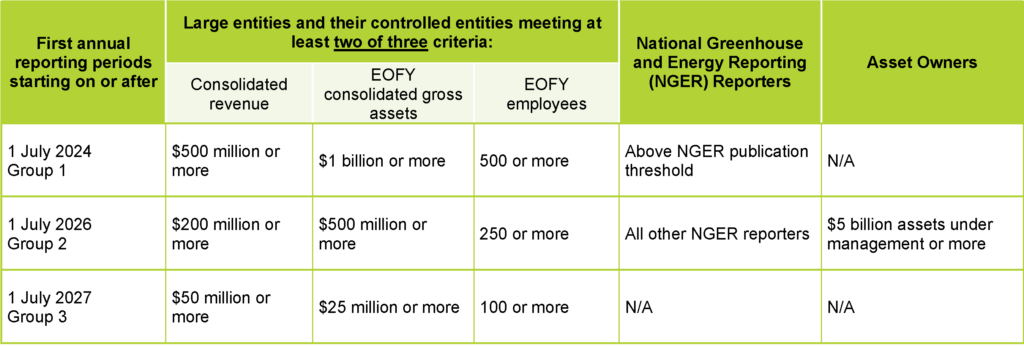
If your business doesn’t meet these thresholds or isn’t part of the NGER reporting scheme, you’re exempt. Small and medium businesses can breathe easy for now!
What’s Included in the Reports?
For the big businesses in the mix, they’ll need to report on:
- Governance: Who’s managing climate-related risks and opportunities.
- Strategy: The plan to tackle climate challenges.
- Risk Management: How risks are identified and handled.
- Metrics & Targets: Key numbers, like greenhouse gas emissions.
Even for those covered, small steps are being taken—Scope 3 emissions (indirect emissions like supply chain impacts) only kick in from the second year of reporting.
SMBs Are Exempt—But There’s More to Consider
Most small and medium businesses don’t need to stress about these changes. If you’re below the size thresholds, you’re off the hook for reporting and assurance requirements. That means more time and money to focus on growing your business without extra compliance headaches.
However, there’s a catch. Bigger businesses need to report on their Scope 3 emissions—those caused indirectly, often through their supply chain. If your SMB is part of a larger company’s supply chain, you might still face questions about your own emissions. These bigger businesses will likely look for ways to reduce their Scope 3 emissions, which could mean asking their suppliers (that’s you!) to track and manage emissions too.
Also, some SMBs might choose to measure their emissions voluntarily. Why? For one, it’s a great way to show customers and stakeholders that you’re serious about sustainability. Plus, it can give you a competitive edge in a market that increasingly values environmentally conscious businesses. Whether it’s for marketing, preparing for future regulations, or simply doing your part for the planet, measuring your emissions can be a smart move.
The Bigger Picture
These changes aim to attract international investment and help Australia transition to a net-zero future. While the big guys have their work cut out for them, smaller businesses can watch and learn from afar—and consider taking proactive steps to stay ahead of the curve.
For a confidential conversation with an SRJ Walker Wayland advisor, contact us today.